
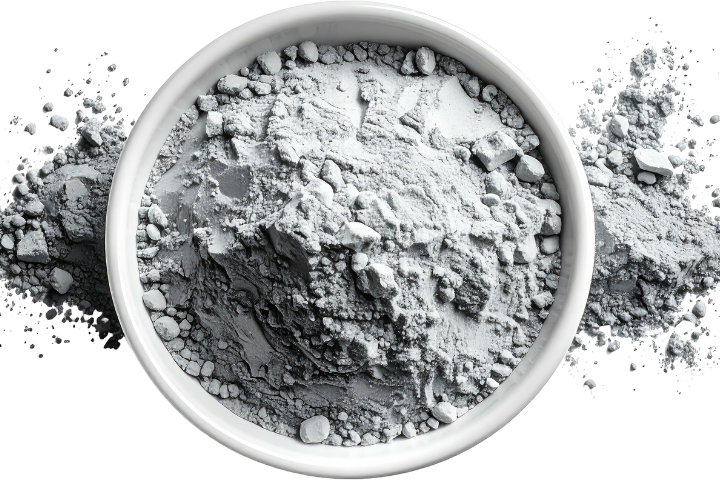
Zinc Oxide Manufacturing and Innovation in Metal Processing
Zinc oxide manufacturing is a vital part of the modern metals industry, providing a versatile base material for a wide range of applications, from anti-corrosion coatings to battery production and industrial paints. Innovations in metal processing, including purification, atomization, and milling techniques, continue to drive the efficiency and quality of zinc powder.
Zinc Oxide Manufacturing in Metal Innovation
The initial stage in the powder metallurgy (PM) process is the production of metal powder. This powder production is generally carried out through four main methods: solid reduction, atomization, electrolysis, and chemical reactions. Each method has different characteristics and applications depending on industrial needs.
Solid Reduction
The solid reduction process begins with the crushing of selected ore, which is often mixed with carbon before being fed into a continuous furnace. Inside the furnace, a chemical reaction removes oxygen from the ore through interaction with the carbon, forming a spongy metal.
This powder is then crushed, separated from the remaining non-metallic material, and sieved to produce a ready-to-use metal powder. This process also improves the purity of the metal while facilitating further processing.
Atomization
The atomization process involves breaking the molten metal into small particles, which are then rapidly solidified. This prevents the droplets from sticking together or impacting solid surfaces.
Typically, molten metal in the form of a thin stream is crushed by impact with a high-pressure jet of gas or liquid, producing fine, uniform metal grains. This procedure also improves control of particle size and the quality of the resulting material.
Electrolysis
By establishing precise conditions, such as electrolyte type and concentration, temperature, and current density, various metals can be produced in porous or powdered form.
Further steps, including washing, drying, reduction, annealing, and grinding, are usually required to obtain powders with optimal purity and density. This process allows for the production of high-quality metals ready for use in a variety of industrial applications.
Chemical
Chemical powder processing generally involves oxide reduction, precipitation from solution, and thermal decomposition. The resulting powder has diverse characteristics, but the particle size and shape remain precisely controlled. Furthermore, this technique allows for the development of materials with specific properties tailored to industrial needs.
Powders produced by oxide reduction are generally porous due to the presence of cavities within each particle. Meanwhile, powders obtained through solution precipitation tend to have uniform particle sizes and high purity.
Thermal decomposition processes are typically used for carbonyl processing. After milling and annealing, the powder can achieve a purity of over 99.5 percent. Furthermore, its porosity and particle uniformity make this powder superior for various industrial applications requiring high precision.
Zinc oxide manufacturing continues to be a key pillar of metal processing innovation, providing materials that are not only functional but also support industrial technological advancements. With the adoption of more efficient and environmentally friendly production methods, zinc powder can meet the needs of a wide range of sectors, from coatings to electronic components.
